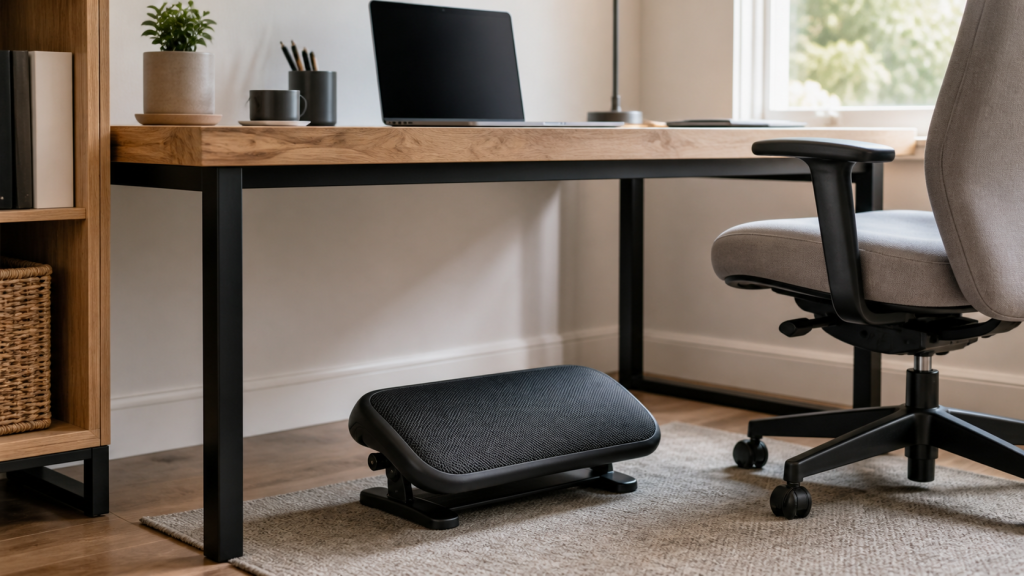
Disclosure: This article contains one affiliate link. If you buy through it, Intuit Chaos may earn a commission at no extra cost to you.
The best footrest material for a desk is the one that fits how you sit, how much your setup changes, and how easy you need it to be to clean. Foam, mesh, plastic, and wood can all work well, but they create very different surfaces under a small home-office desk. Instead of choosing from a product photo alone, compare the feel, grip, shape, and daily upkeep.
There is no single best material for every desk
A footrest is a small part of a workstation, but it competes for limited floor space with a chair base, cables, and sometimes a storage bin. Start with the room you have under the desk. Then think about whether you prefer a soft surface, a firm platform, or a model that can change angle. Material matters most when it changes those everyday details.
If you are still deciding whether a footrest belongs in your setup, our under-desk footrest guide compares the main product styles to look for.
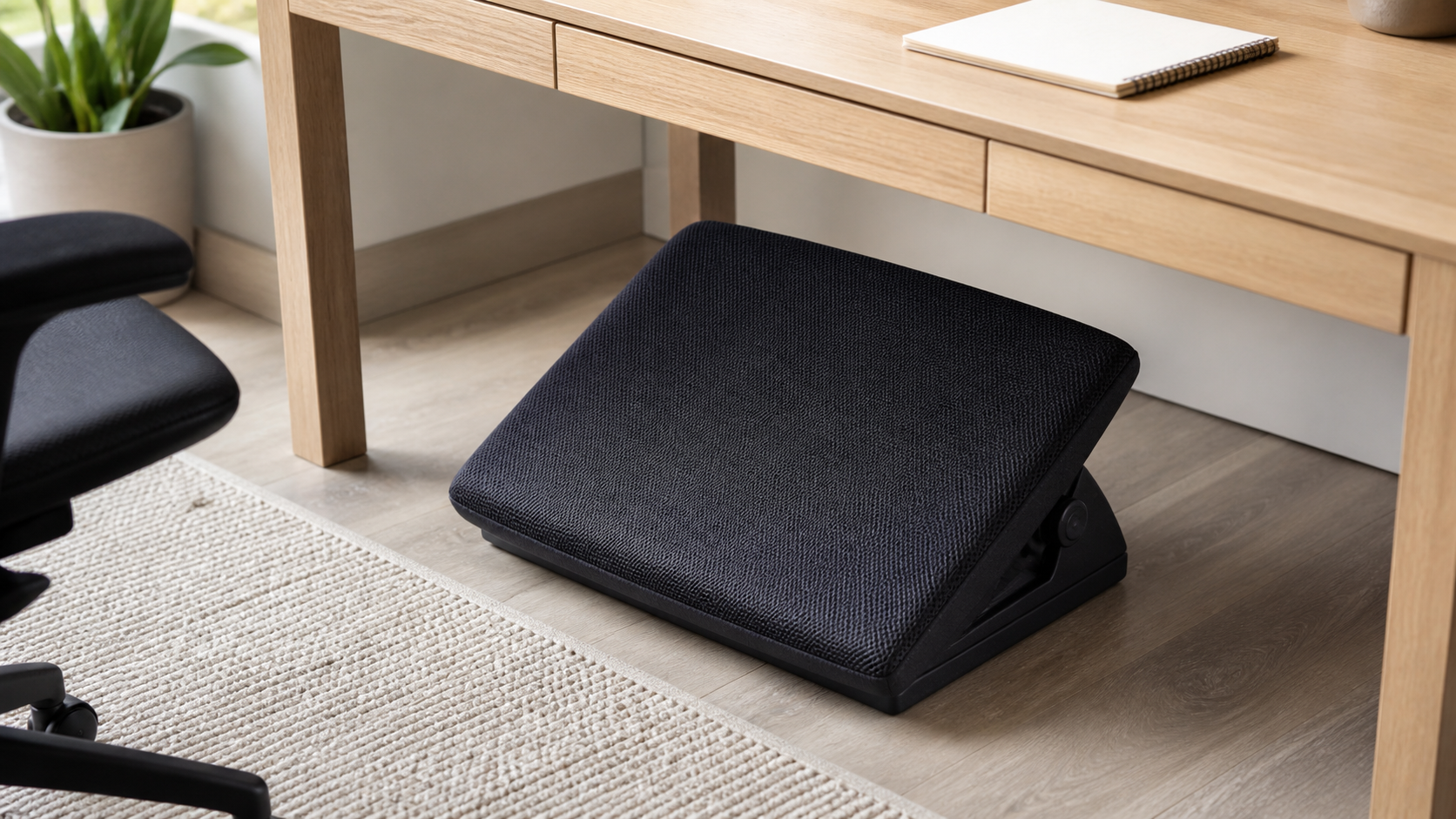
Foam: soft, quiet, and easy to reposition
Foam footrests are often chosen for a softer surface and low weight. A molded foam model can feel comfortable when you keep your feet in one place for longer work sessions, while a loose cushion-style footrest is easy to move away when you need more open floor space. A textured or washable cover is useful because this item sits close to the floor.
The tradeoff is that foam does not always hold a precise angle. If you want a fixed platform or a distinct tilt setting, check the construction underneath the cover. Also look at the base: a soft footrest that slides on a smooth floor quickly becomes distracting.
Mesh and fabric-covered footrests: more texture and airflow
Mesh or fabric-covered models usually place a breathable surface over foam or a firmer internal frame. They can feel less slippery than bare plastic, and the texture often makes the platform easier to find with your feet without looking down. This is a sensible middle ground when you want a softer top but still prefer a shaped, adjustable base.
Check how the cover is attached and whether it can be cleaned. A tightly fitted cover is easier to keep neat; a removable cover can be useful in a busy shared workspace. The material itself is only part of the decision, so review the platform size and the edge shape as well.
Plastic: firm, practical, and simple to clean
Plastic footrests are usually the most straightforward choice for a firm, wipe-clean surface. Many use ridges, bumps, or a tilting platform rather than a soft cushion. That can suit a desk where the footrest is used briefly throughout the day, or where a fixed shape is more useful than a plush feel.
Look closely at the underside before choosing one. Rubber feet or a wide base help it stay where you put it. Also consider the platform edge: a compact model can save floor space, but it should still feel stable for the way you normally place your feet.
Wood or bamboo: a stable platform with a furniture-like look
Wood and bamboo footrests can be a good fit when you want a simple, sturdy platform that matches a natural desk setup. They are usually easy to wipe down and do not compress like foam. Some people prefer the firm, solid feel, especially when the footrest doubles as a small angled platform.
Pay attention to finish and surface texture. A smooth platform may need a grip strip or a nonslip base, while an unfinished or rough surface can be harder to maintain. As with plastic, confirm the footprint will not interfere with chair movement.
Choose the surface and the base together
Material alone does not tell you whether a footrest will work. A useful comparison list includes:
- Firmness: Do you prefer a cushioned rest or a solid platform?
- Grip: Will the feet and base stay in place on your floor?
- Angle: Does the model stay flat, tilt freely, or offer set positions?
- Cleaning: Can you wipe it down or remove the cover when needed?
- Footprint: Does it leave enough room for the chair and nearby storage?
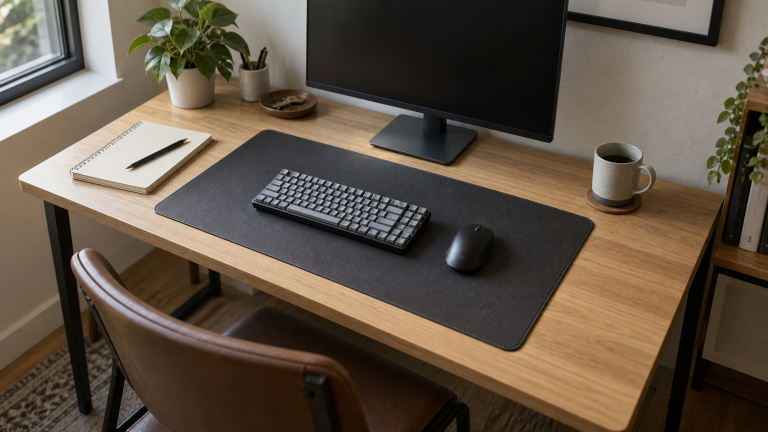
A desk mat can also help define the working area above the floor. For smaller setups, see our guide to desk mats for small home offices before adding more accessories.
A quick material decision guide
Choose foam when a soft, quiet, lightweight option matters most. Choose mesh or fabric over a shaped base when you want texture with a little more structure. Choose plastic when easy cleaning and a firm platform are the priority. Choose wood or bamboo when you prefer a durable, furniture-like platform and have measured the available floor space.
Whichever material you choose, set it in place and roll the chair through its normal range before committing to the layout. That small check prevents an accessory from turning a clear workstation into a cramped one.
Optional shopping starting point: Browse under-desk footrests on Amazon.


Leave a Reply