Disclosure: This article contains one affiliate link. If you buy through it, Intuit Chaos may earn a commission at no extra cost to you.
Under-desk storage can make a small home office feel calmer, but only when it stores useful items without taking over the space where you sit. Drawers, bins, and hanging organizers each solve a different problem. The right choice begins with the clearance below your desk, the objects you reach for most, and how often you need to reset the workspace.
Measure the open space before choosing a storage type
Start with the area your chair actually uses, not just the empty rectangle below the desktop. Roll the chair in and out, notice the path of the chair base, and identify the central area that should stay clear. Then measure the depth along the side and back of the desk. This prevents a useful-looking storage piece from becoming an obstacle every day.
For a wider overview of desktop and drawer options, see our guide to under-desk storage drawers for small home offices.
Drawer units work best for small items that need a home
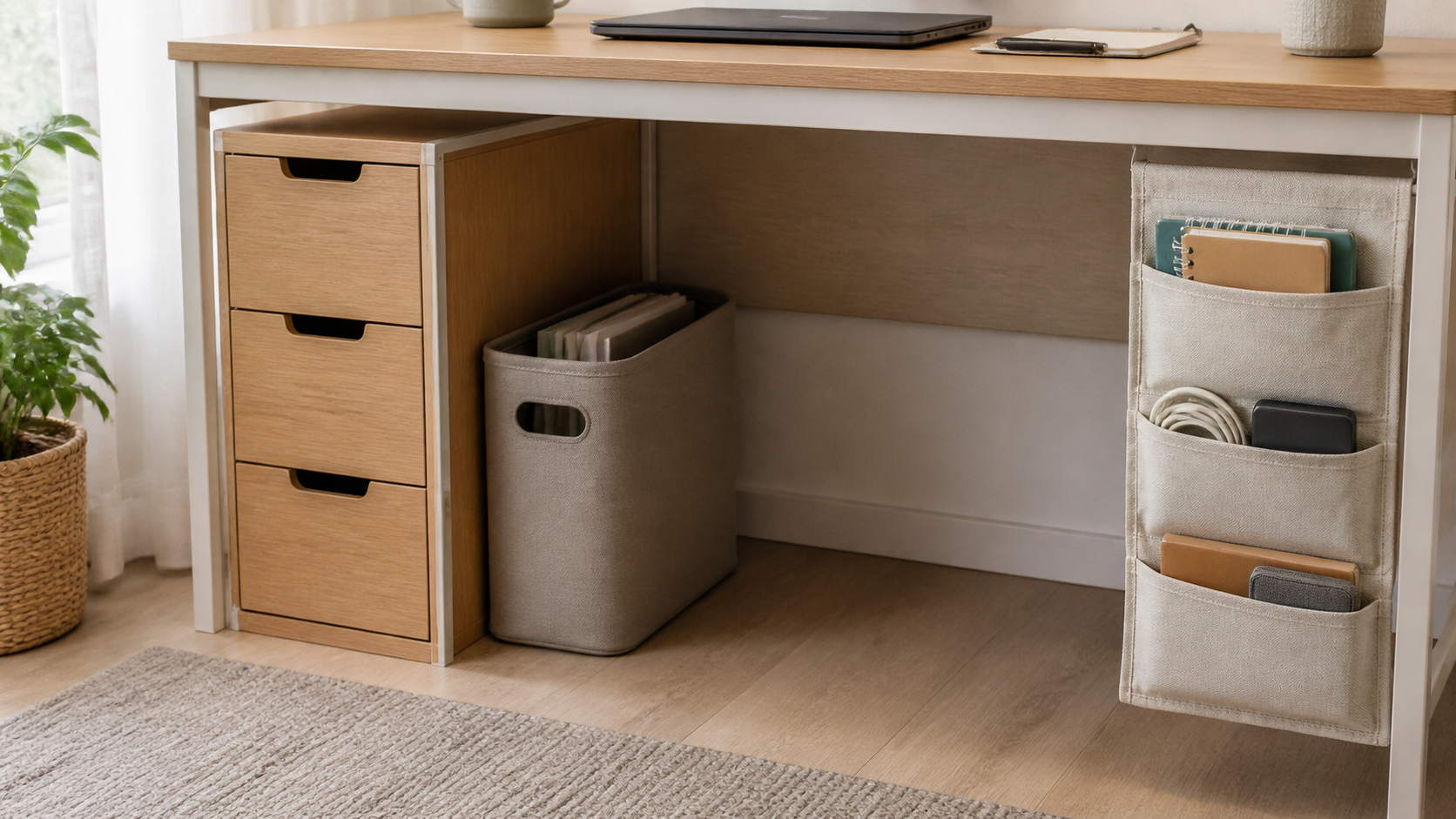
A narrow drawer unit is useful for cables, notebooks, stationery, adapters, and other small supplies that look messy when left on the desk. Rolling drawers are flexible because they can be pulled out for cleaning or moved to the side when the layout changes. Fixed drawers are a better fit when the desk always stays in one place.
Before buying, check the height below the desktop and the clearance around the chair base. A deep unit may hold more, but a shallow one can be more practical when the desk is compact. It is also worth separating daily-use supplies from rarely used items, so the top drawer stays genuinely helpful.
Fabric bins make flexible storage for larger, lighter items
A bin is a simple solution for paper, headphones, chargers, or a laptop sleeve. It can slide toward the back of the desk when not needed and is easy to lift out during a cleanup. Choose a bin with a firm enough shape to stand upright and a size that leaves the main sitting area open.
Bins are especially useful when you do not want to attach anything to the desk. The downside is that they can become a catch-all. Give each bin one job, such as meeting supplies or cables waiting to be sorted, instead of filling it with every loose item.
Hanging organizers use the side of the desk
A hanging pocket organizer can turn a quiet desk side into storage for notebooks, small devices, mail, or accessories. This works well when floor clearance is limited and the items are light enough to reach without pulling the organizer out of shape. Put it on the far side of the desk so it does not interfere with your legs or chair movement.
Check the attachment method and the desk edge before choosing one. A solution that suits one desk may not fit another, especially if the frame, drawers, or cable tray occupy the same area. Keep heavier items in a drawer unit or bin rather than overloading a hanging pocket.
Use a mixed setup only when each zone has a purpose
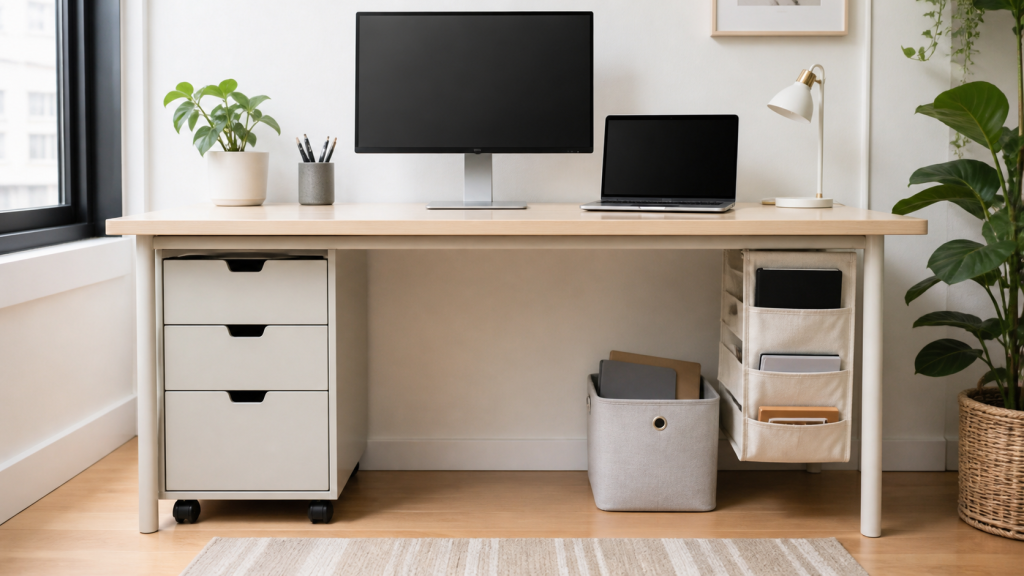
Many small offices need more than one type of storage. A sensible mix is a slim drawer unit for small items, one bin for larger supplies, and a hanging organizer for the things you need at arm’s reach. The key is to keep the center beneath the desk free, rather than filling every available inch.
This approach also makes cleaning easier. You can move one piece at a time, vacuum the floor, and return only the items that still belong in the setup. For additional desktop ideas, our guide to desk organization products for small home offices can help you decide what should stay above the desk instead.
Plan storage around cable access and cleaning
Under-desk storage and cable routing should work together. Do not block a power strip, charger, or cable path with a bin that is hard to move. Leave a little access space at the back and avoid resting heavy storage directly on cords. A quick cable plan makes it easier to clean and adjust the desk later.
Read Cable Management Basics for Home Offices for a simple way to map the desk, power, and cable zones before adding more storage.
A quick choice guide
- Choose drawers for small supplies that need to stay sorted and out of sight.
- Choose bins for flexible, lightweight storage that can move with the workspace.
- Choose hanging organizers when you need to use a desk side instead of the floor.
- Combine them carefully when each piece has a specific job and the chair area remains clear.
The best under-desk storage solution is usually the smallest arrangement that keeps your working surface clear and lets you reach what you need without searching. Measure first, add one zone at a time, and let the setup prove itself for a week before adding more.
Optional shopping starting point: Browse under-desk storage organizers on Amazon.
Leave a Reply