Disclosure: As an Amazon Associate I earn from qualifying purchases. This article contains affiliate links, which may earn us a commission at no extra cost to you.
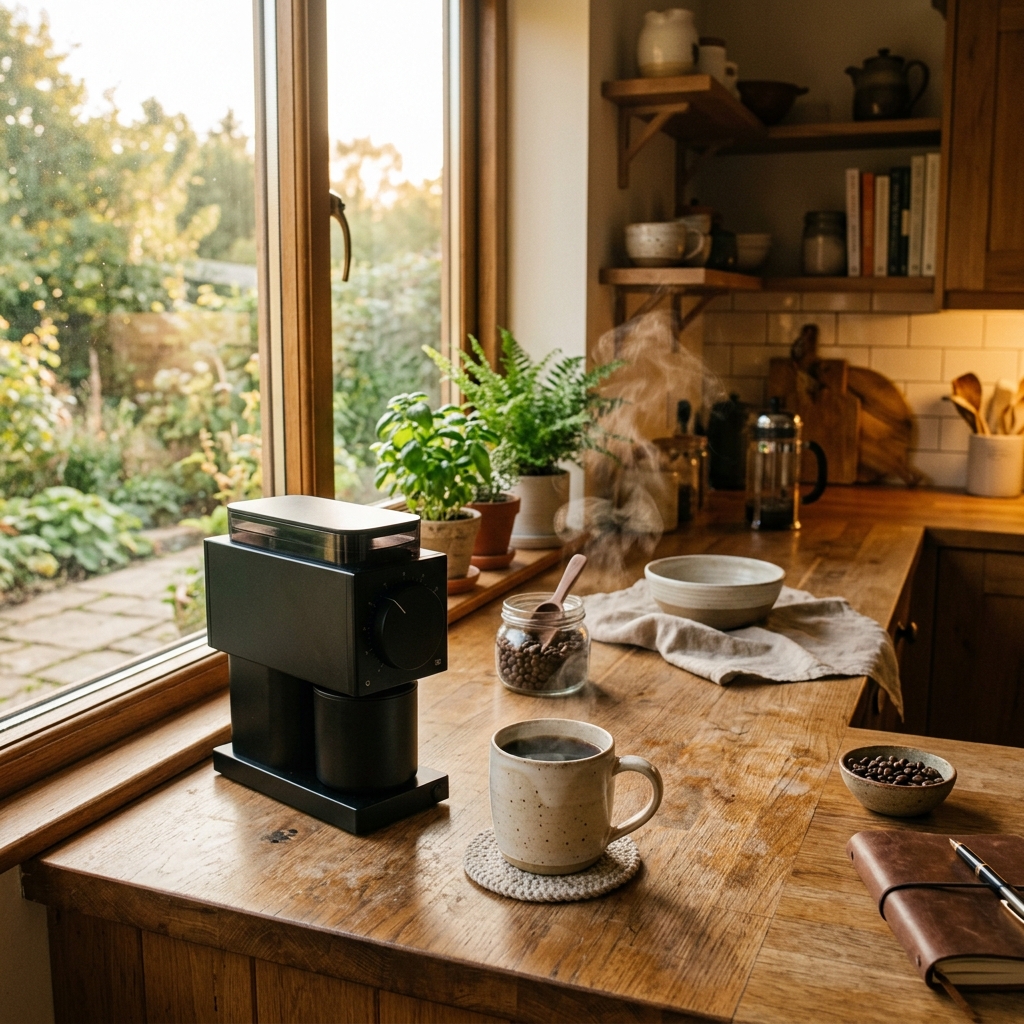
A coffee grinder will never be completely silent: the motor, burrs, beans, countertop, and room all affect what you hear. The useful question is not which grinder makes zero noise, but which design is likely to be easier to live with during an early-morning routine.
This guide compares five options using current manufacturer specifications, manuals, and product descriptions. We have not conducted instrumented decibel testing, so terms such as quieter describe design features and intended use, not a guaranteed sound level in every kitchen. Product versions and availability can change; confirm the current listing before buying.
Quick Comparison
| Option | Useful for | Noise-related consideration | Current listings |
|---|---|---|---|
| Eureka Mignon Silenzio 55 | Espresso and mixed use | Manufacturer-listed Silent Technology and a substantial 5.6 kg body | View on Amazon |
| Fellow Ode Brew Grinder Gen 2 | Pour-over, drip, French press, and cold brew | Manufacturer describes quiet grind noise; automatic stop limits run time | View on Amazon |
| Baratza Virtuoso+ | General brewed-coffee routines | Sturdy case and a manufacturer-listed no-load burr speed of 550 RPM | View on Amazon |
| 1Zpresso JX-Pro manual grinder | Manual grinding with broad adjustment | No electric motor, although beans and burrs remain audible | View current availability |
| TIMEMORE Chestnut C2 manual grinder | Simple manual brewing routines | No motor noise; effort and grind time depend on beans and setting | View current availability |
1. Eureka Mignon Silenzio 55
The Mignon Silenzio 55 is the most purpose-built electric option in this group for buyers who care about reducing grinder noise. Eureka lists Silent Technology, a 1,350 RPM motor, 55 mm hardened-steel flat burrs, stepless micrometric adjustment, and a 5.6 kg body. Those details make it worth comparing when you want an espresso-capable grinder with a heavier construction.
Do not interpret the word Silenzio as a promise of silent operation. Countertop material, room acoustics, grind setting, and bean density still matter. It is also a relatively specialized machine, so confirm that its adjustment workflow suits your brew method.
Check Eureka’s current specifications.
2. Fellow Ode Brew Grinder Gen 2
The Ode Gen 2 is designed for brewed coffee rather than espresso. Fellow lists 64 mm stainless-steel flat burrs, automatic stop, anti-static technology, and quiet grind noise among its features. Automatic stop is useful in a shared home because the grinder stops when the dose is finished instead of continuing until you return to the machine.
This is the clearest fit here for pour-over, drip, French press, or cold brew. It is not intended for espresso, so buyers who need one grinder for espresso and filter coffee should consider a different category.
Check Fellow’s current specifications and brew-method limits.
3. Baratza Virtuoso+
Baratza describes the Virtuoso+ as having a sturdy case that makes grinding quieter. Current manufacturer specifications list a 40 mm conical steel burr, a no-load burr speed of 550 RPM, and a digital timer with 0.1-second resolution. A repeatable timer can help you prepare a consistent dose without leaving the machine running longer than needed.
It remains an electric grinder, so expect audible motor and bean noise. Its practical advantage is a familiar brewed-coffee workflow, published replacement and support information, and a compact footprint rather than a claim of silence.
Check Baratza’s current product specifications.
4. 1Zpresso JX-Pro Manual Grinder
A manual grinder removes electric motor noise, but it does not remove the sound of beans being crushed. The JX-Pro can still be useful for someone who values control, portability, and a short manual routine. However, this model has been on the market for several years and availability can vary, so check that the exact version, warranty, burr information, and adjustment system shown by the seller match what you expect.
Manual grinding also requires hand effort. For several servings at once, an electric grinder may be more practical even if it is louder for a brief period.
5. TIMEMORE Chestnut C2 Manual Grinder
The Chestnut C2 is another manual option commonly considered for pour-over and AeroPress-style routines. As with the JX-Pro, the main noise advantage is the absence of an electric motor. It is not accurate to call any manual grinder silent, and grind time varies with roast level, dose, burr condition, and grind setting.
Before buying, verify the current model revision, materials, capacity, included accessories, and seller support. Similar product names can refer to different regional or updated versions.
What Actually Makes a Coffee Grinder Easier to Live With?
Motor and operating time
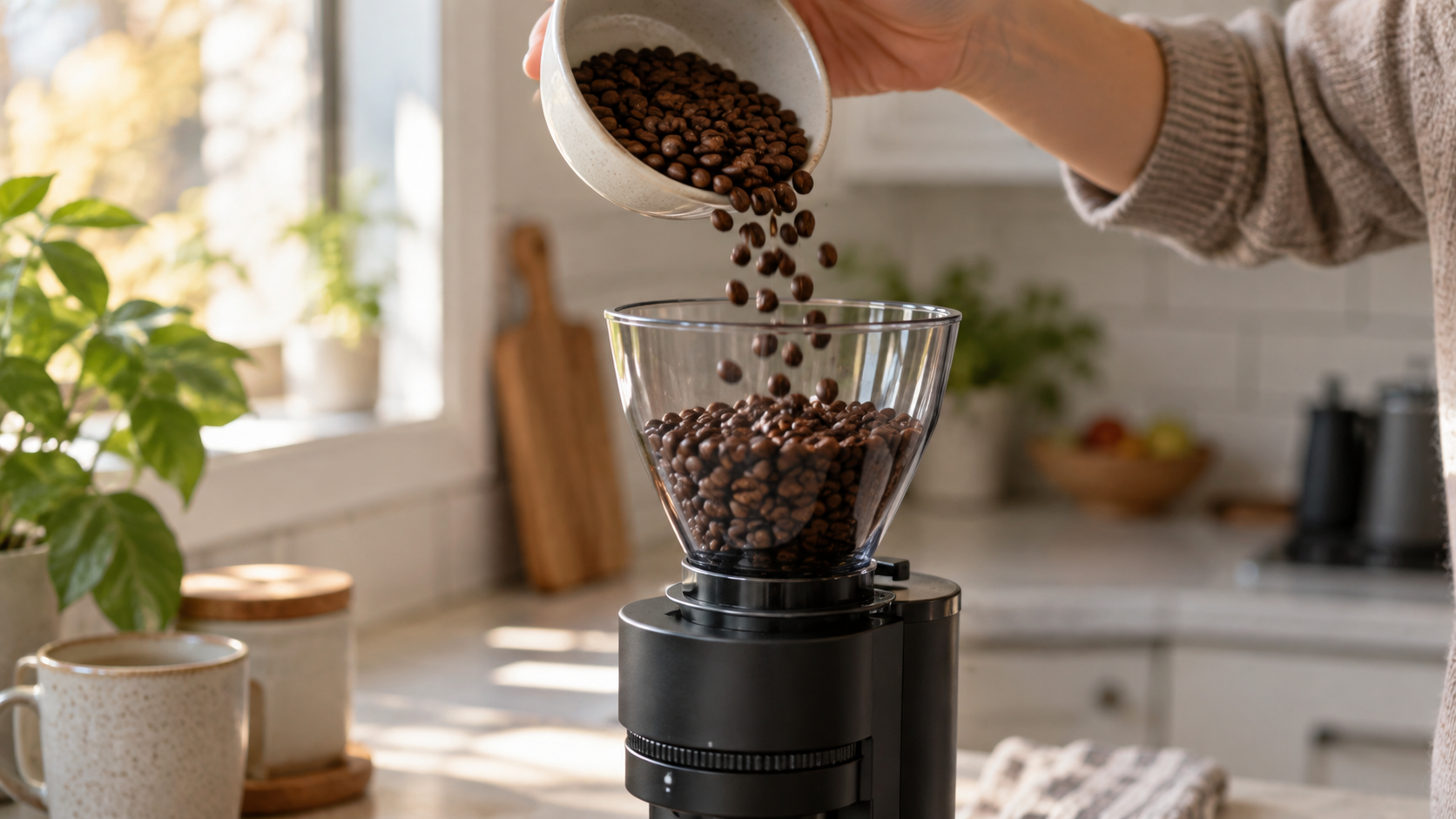
Motor pitch can be more noticeable than overall volume. A grinder that completes a dose quickly may be less disruptive than one that runs for a long time, but burr size alone does not determine speed or sound. Look for a manufacturer-published speed or operating description and consider the dose you normally prepare.
Body weight and vibration
A rigid body and stable feet can reduce vibration transmitted to the counter. The counter itself can amplify sound, especially if it is hollow or touches a wall. A properly sized non-slip rubber or silicone mat can reduce vibration, provided it does not block ventilation or make the appliance unstable.
Burr grinder versus blade grinder
Burr grinders and blade grinders use different mechanisms. Burr grinders provide more control over particle size, while blade grinders chop beans with a spinning blade. Do not assume every burr grinder is quieter: motor design, casing, load, and grind setting still influence the result.
Manual versus electric
Manual grinders avoid motor noise and need no outlet, but require physical effort. Electric grinders are faster and more convenient for larger doses. The right choice depends on whether your priority is lower appliance noise, speed, espresso capability, or ease of use.
Three Checks Before You Buy
- Confirm the brew range. A grinder designed for filter coffee may not grind appropriately for espresso.
- Check current specifications. Burr size, materials, dimensions, and model revisions can change.
- Plan the location. Keep the grinder stable, away from the edge, and clear of moisture. Follow the manufacturer’s ventilation and cleaning instructions.
Frequently Asked Questions
Are manual coffee grinders silent?
No. They eliminate electric motor noise, but the handle, bearings, burrs, and beans still create sound. Many people find that sound less intrusive, but the result depends on the grinder and room.
Can a mat make an electric grinder quieter?
A non-slip rubber or silicone mat may reduce vibration transferred to the counter. Use a flat mat that keeps the grinder stable and does not cover vents. A folded towel is less predictable because it can shift, retain moisture, or interfere with airflow.
Should I choose the model with the largest burrs?
Not on burr size alone. Burr geometry, motor, adjustment range, alignment, intended brew method, retention, workflow, and support all matter. Use the complete specification rather than one number.
Bottom Line
For an espresso-oriented electric grinder, the Eureka Mignon Silenzio 55 has the clearest manufacturer emphasis on noise reduction. For brewed coffee, the Fellow Ode Gen 2 and Baratza Virtuoso+ publish useful features that can support a calmer routine. A manual grinder removes motor noise but trades convenience for hand effort. None of these choices is guaranteed to be the quietest in every room, so match the grinder to your brew method first and treat noise-related features as one part of the decision.