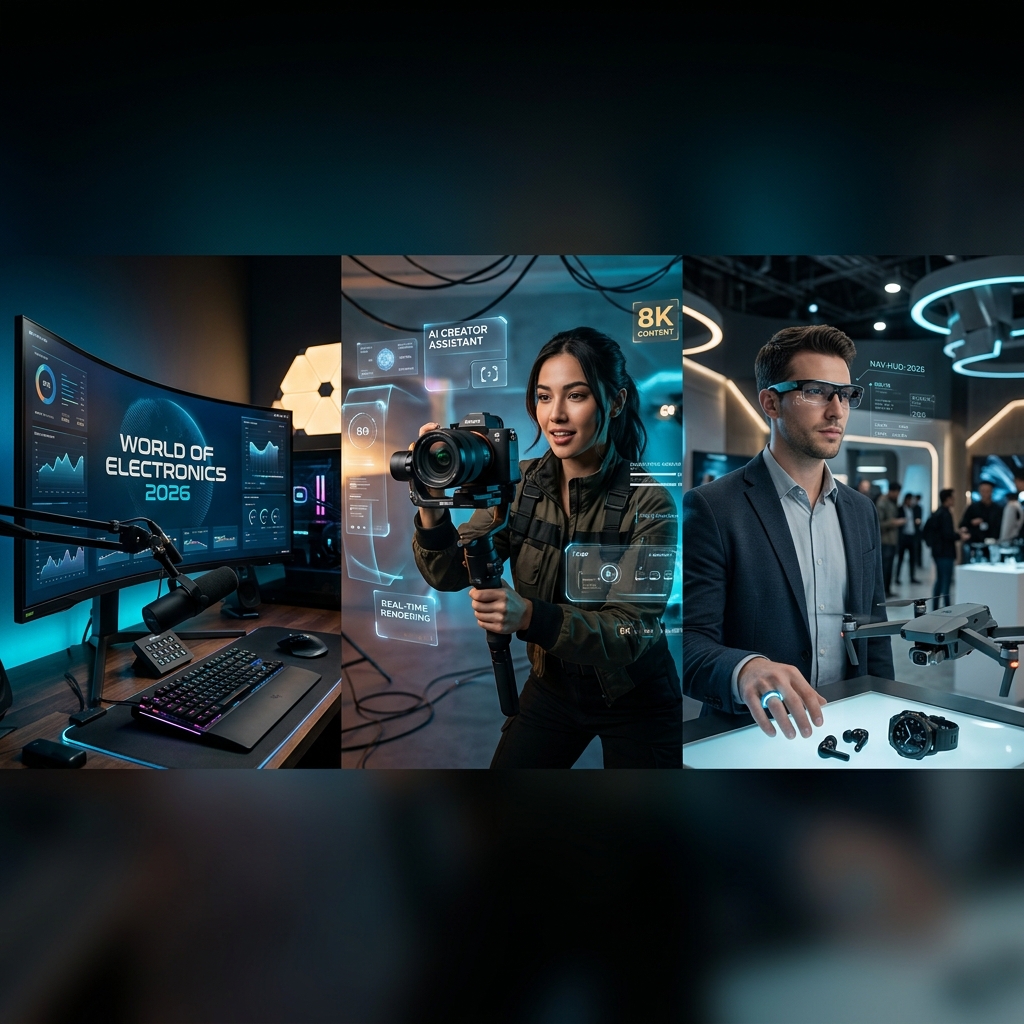
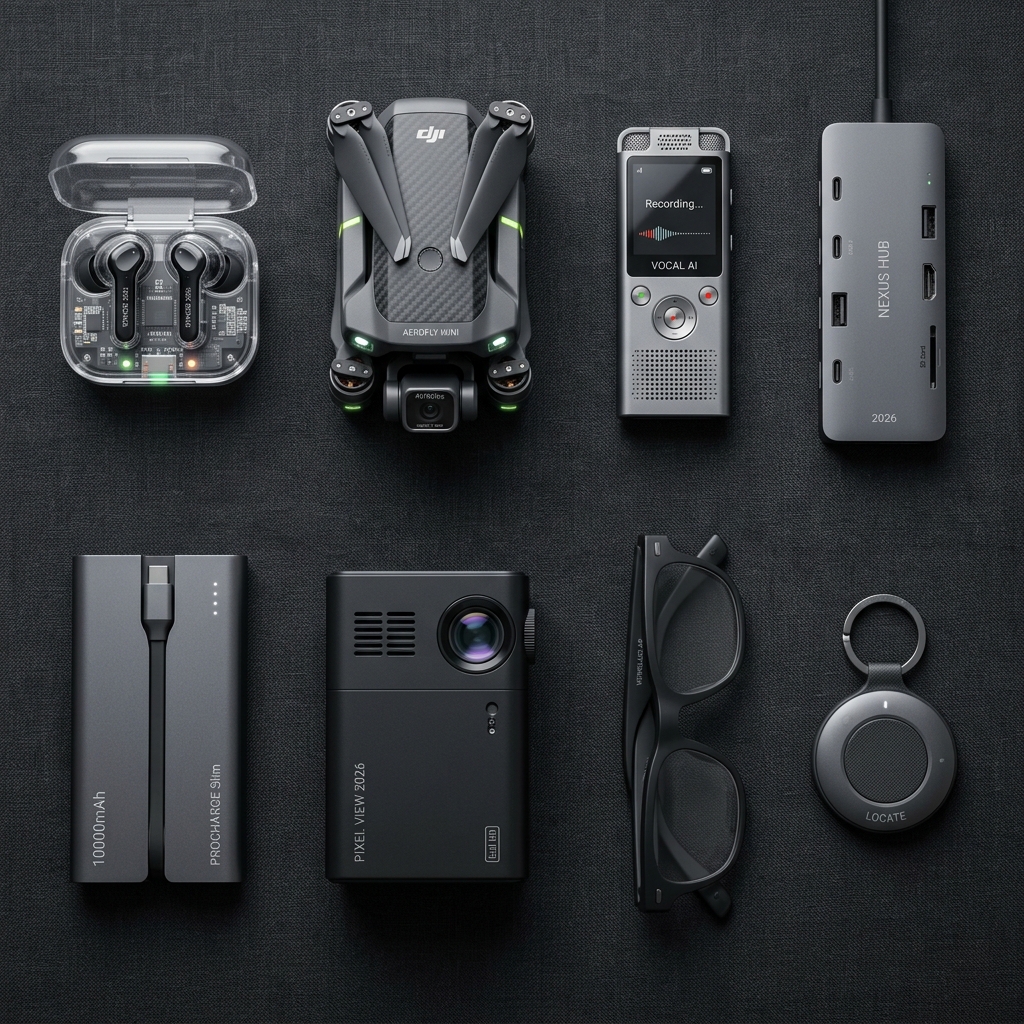
There is a moment — and every tech enthusiast knows it — when you unbox a new device that genuinely changes how you work, create, or experience digital life. Not a marginal upgrade. Not a slightly faster version of the same thing. A genuine paradigm shift. In 2026, those moments are happening with extraordinary frequency.
The electronics and tech accessories landscape has evolved beyond the era of specifications wars and benchmarks bragging rights. The defining characteristic of 2026 hardware is intelligence — not just raw processing power, but the ability to adapt, anticipate, and integrate seamlessly into your workflow without demanding your constant attention. For content creators specifically, this means the tools are finally getting out of the way and letting you focus on what actually matters: telling compelling stories, connecting authentically with an audience, and producing work you are genuinely proud of.
This guide covers the most significant trends, innovations, and practical buying advice across three interconnected worlds: everyday tech accessories, professional-grade creator tools, and the AI-powered software layer that ties everything together. Whether you are a seasoned YouTuber upgrading your production pipeline, a podcaster setting up your first serious studio, or a tech-forward professional building the ultimate portable workflow, this is where the industry stands right now.
1. The Invisible Tech Revolution: Accessories That Disappear Into Your Life
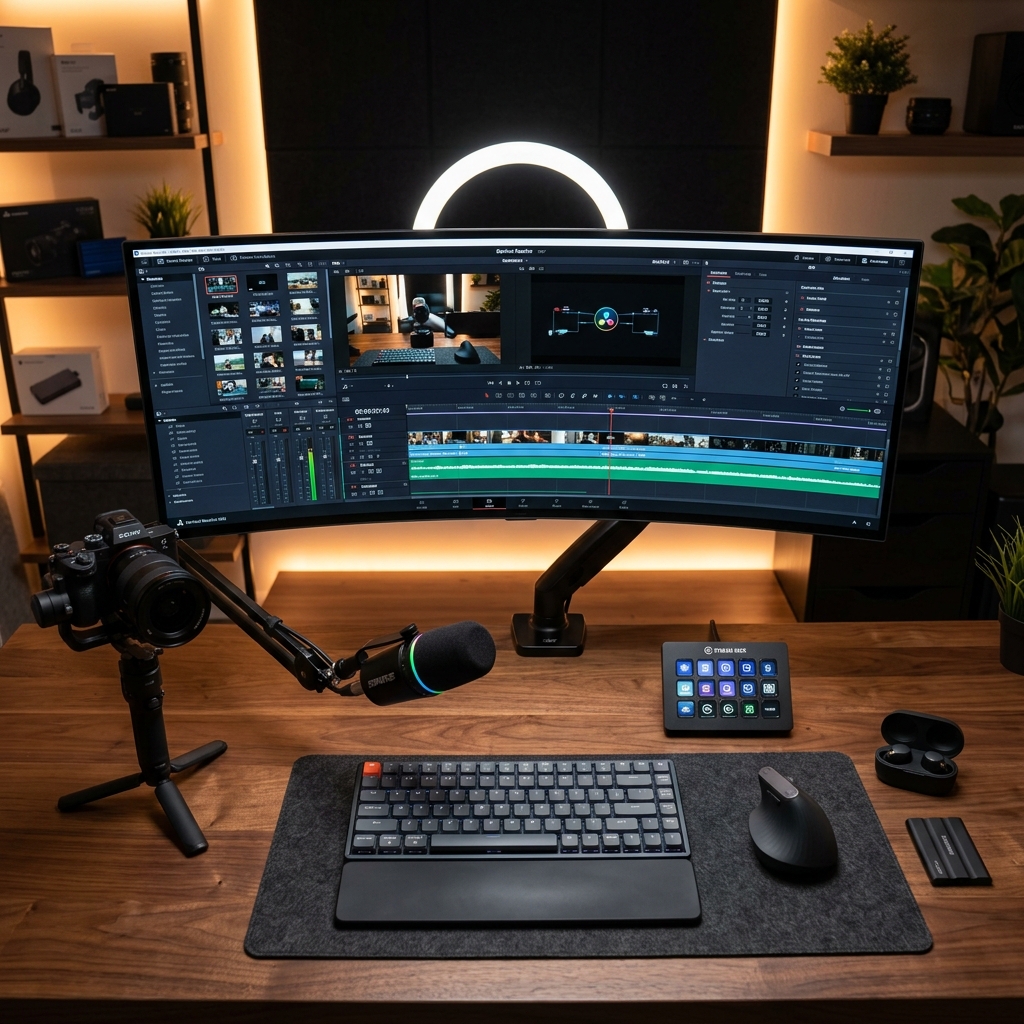
The most important trend in consumer tech accessories for 2026 can be summarized in a single word: ambient. The best accessories are the ones you stop thinking about because they work so intuitively that they blend into the background of your daily life. This is a philosophical shift from the “look at my gadget” era to the “it just works” era.
Smart Rings: The Silent Powerhouse
If 2024 was the year smart rings entered the mainstream conversation, 2026 is the year they proved their value. The latest generation of smart rings has moved well beyond basic step counting. Modern smart rings now offer:
- Continuous Health Monitoring: Heart rate variability (HRV), blood oxygen saturation, skin temperature trends, and stress-level estimation — all without wearing a bulky watch to bed.
- Gesture Control: Subtle finger movements can dismiss phone calls, control music playback, or trigger smart home scenes. The ring becomes a discreet remote control for your digital life.
- NFC Payments and Access: Tap your ring on a payment terminal or a smart lock. No phone needed, no watch needed. Just your hand.
- Subscription-Free Models: A notable trend in 2026 is the rise of smart rings that offer full functionality without mandatory monthly subscriptions — a direct response to consumer backlash against recurring fees for hardware they have already purchased.
Smart Glasses: From Novelty to Daily Driver
Smart glasses have crossed the usability threshold in 2026. The current generation is lightweight enough to wear all day (under 40 grams for some models), aesthetically indistinguishable from regular eyewear, and functionally compelling. Key capabilities include:
- Real-Time Translation: See translated text overlaid on your field of vision during face-to-face conversations in a foreign language. This single feature has made smart glasses indispensable for international travelers and business professionals.
- AR Navigation: Subtle directional arrows appear at the edge of your vision while walking or cycling, keeping your eyes on the road rather than glued to a phone screen.
- Notification Triage: Incoming messages, calendar alerts, and delivery notifications appear briefly at the periphery of your vision. Urgent items are highlighted; everything else is silently logged for later.
- Integrated Audio: Open-ear speakers built into the temple arms deliver clear personal audio for calls and music without blocking ambient sound — critical for safety and social awareness.
The USB-C Ecosystem Has Finally Matured
After years of confusion around USB-C standards, 2026 has brought welcome clarity. The universal adoption of USB4 Version 2.0 means a single USB-C cable can now deliver up to 80 Gbps of data transfer, 240W of power delivery, and dual 4K display output simultaneously. The practical impact is enormous: a single compact hub can connect your laptop to an external monitor, charge it, drive an external SSD, and connect a microphone — all through one port. The era of carrying five different cables and adapters is genuinely over.
2. The Content Creator’s Studio: 2026 Edition
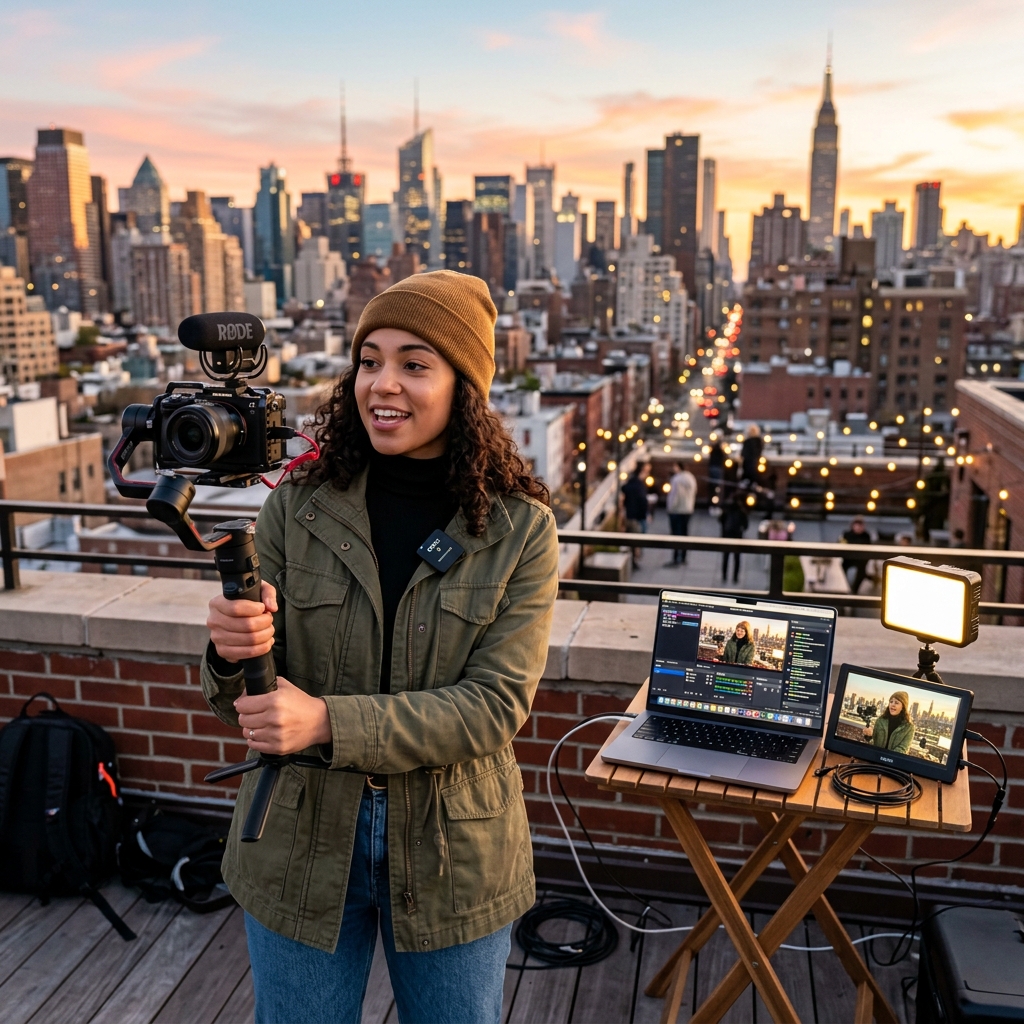
Building a creator studio in 2026 is simultaneously easier and more complex than ever. Easier because the quality floor has risen dramatically — even budget gear produces surprisingly good results. More complex because the sheer number of options can paralyze decision-making. Here is a structured breakdown of every major category, designed to help you invest wisely.
Cameras: Matching the Tool to the Job
The camera market in 2026 has stratified clearly into three practical tiers for creators:
| Use Case | Best Camera Type | What to Look For |
|---|---|---|
| Streaming / Video Calls | AI-Powered Webcams (e.g., Insta360 Link 2C Pro, Obsbot Tiny 2 Lite) | Auto-framing, face tracking, gesture controls, 4K @ 30fps, built-in AI noise reduction |
| Vlogging / YouTube | Compact Mirrorless (e.g., Sony ZV-E10 II, Canon EOS R50) | Flip-out screen, reliable autofocus with eye tracking, clean HDMI output, mic input, lightweight body |
| Cinematic / Short Film | Full-Frame Mirrorless (e.g., Sony A7 IV, Canon R6 III) | 10-bit 4:2:2 internal recording, S-Log/C-Log profiles, in-body stabilization, dual card slots |
| Action / Travel | 360 Cameras (e.g., Insta360 X5) | “Shoot first, frame later” workflow, invisible selfie stick, AI-powered reframing in post |
A critical 2026 insight: The rise of 360-degree cameras represents a fundamental shift in creator workflow. Rather than carefully composing every shot in real-time, you capture the entire scene and let AI-powered reframing software select the best angles, movements, and compositions in post-production. For solo creators who cannot afford a camera operator, this is a game-changer.
Audio: The Number One Priority (Seriously)
Let’s settle this debate once and for all: audio quality is more important than video quality for content creation. Viewers will tolerate a slightly soft image or imperfect lighting far longer than they will tolerate echo-filled, tinny, or muffled audio. If you are building or upgrading your creator toolkit on a budget, invest in the microphone first. Always.
The 2026 audio landscape for creators is built around two transformative technologies:
🎙️ 32-Bit Float Recording
Traditional audio recording requires you to set gain levels correctly before you hit record. If the signal is too hot, it clips irreversibly. If it is too quiet, you get noise when you amplify it. 32-bit float recording eliminates this problem entirely. The dynamic range is so vast that it is virtually impossible to clip the signal or record audio too quietly. You can fix levels perfectly in post-production every single time. This is available in wireless systems from RØDE, DJI, and Insta360, and it has removed one of the most stressful technical variables from the recording process.
🔇 AI Noise Cancellation
On-device AI noise cancellation in 2026 wireless microphones can isolate human voice from environmental noise in real-time with stunning accuracy. Wind, traffic, construction, café chatter — the AI strips it out during recording, not just in post. This means you can record broadcast-quality audio in environments that would have been unusable just two years ago.
For studio-based creators (podcasters, streamers, voiceover artists), the dynamic microphone remains king. Models like the Shure SM7B and Elgato Wave:3 naturally reject room noise and off-axis sound, making them forgiving of imperfect acoustic treatment — which is the reality for most home studios.
Lighting: The Underrated Production Multiplier
Good lighting is the single fastest way to make your content look dramatically more professional, and it remains the most underinvested category among new creators. In 2026, the key innovations include:
- Bi-Color LED Panels: Adjustable from warm tungsten (3200K) to cool daylight (5600K), allowing you to match any ambient lighting condition.
- RGB Creative Panels: Full-spectrum color panels for mood lighting, accent colors, and creative effects — increasingly affordable and controlled via smartphone apps.
- Portable Key Lights: Ultra-compact, battery-powered LED panels that clip to a laptop or mount on a travel tripod, giving mobile creators studio-quality key lighting anywhere.
- AI-Driven Auto-Adjustment: Some newer panel lights can automatically adjust color temperature and intensity based on ambient conditions detected by a built-in sensor, maintaining consistent lighting even as natural light changes throughout the day.
3. The AI Layer: Software That Transforms the Creative Pipeline
Hardware is the body of a creator’s toolkit. Software — increasingly powered by AI — is the brain. In 2026, the most impactful software tools for content creators are those that automate the tedious, repetitive tasks that consume disproportionate amounts of time, freeing the creator to focus on ideation, storytelling, and audience engagement.
Video Editing: AI as Your Silent Assistant Editor
Modern editing software has integrated AI so deeply that it feels less like a separate feature and more like an invisible collaborator:
- Silence Removal: Automatically detects and cuts dead air, pauses, and “ums” from footage, reducing a 45-minute raw recording to a tight 20-minute edit in seconds.
- Auto-Captioning with Emotion Tags: AI-generated captions are now highly accurate, multilingual, and can be styled automatically. Some platforms even tag emotional tone (excitement, seriousness, humor) to help with editing pacing.
- Smart Reframing: Automatically reframes horizontal 16:9 footage into vertical 9:16 for TikTok, Reels, and Shorts — tracking the speaker’s face and key visual elements dynamically.
- Color Grading Assistance: AI analyzes the visual tone of your footage and suggests (or automatically applies) color grades that match a specific mood or reference image. This brings a level of cinematic polish that previously required a skilled colorist.
- Transcript-Based Editing: Tools like Descript allow you to edit video by editing text. Delete a sentence from the transcript, and the corresponding footage is automatically removed. This is revolutionary for podcasters and interview-based content.
Generative AI for Creators: A Practical Guide
The generative AI tools available to creators in 2026 are powerful, but they are most effective when used to augment human creativity rather than replace it. Here is where they genuinely add value:
| Tool Category | Best Use Case | What to Watch Out For |
|---|---|---|
| Image Generation (Adobe Firefly, Midjourney) | Thumbnails, concept art, blog imagery, social media graphics | Always review for accuracy; never pass off AI art as original photography without disclosure |
| Voice Synthesis (ElevenLabs) | Voiceovers for explainer videos, multilingual dubbing of existing content | Use your own voice clone ethically; disclose synthetic audio to your audience |
| Video Generation (Runway, Pika) | B-roll footage, motion backgrounds, visual effects shots | Quality varies significantly; best used for supplementary footage, not primary content |
| Writing Assistance (Claude, ChatGPT) | Script outlines, brainstorming, research summaries, SEO metadata | Always fact-check; use as a starting point, never as a final draft |
The authenticity paradox: Interestingly, as AI-generated content floods every platform, audiences in 2026 are increasingly valuing demonstrably human content. Imperfections, raw behind-the-scenes footage, and genuine personality are becoming competitive advantages rather than liabilities. The smartest creators use AI to handle the boring logistics and production overhead, then pour their saved time into the uniquely human elements that AI cannot replicate: personal perspective, emotional storytelling, and authentic connection.
4. The Mobile Creator: Producing Professional Content on the Move

The single biggest operational shift in content creation in 2026 is the decoupling of professional quality from a fixed studio location. A creator with the right portable kit can now produce broadcast-quality content from a hotel room, a co-working space, a rooftop, or a mountain trail — and the audience cannot tell the difference.
The Essential Mobile Creator Kit
Here is a practical, field-tested mobile production setup that fits in a single backpack:
- Camera: A compact mirrorless body (Sony ZV-E10 II or similar) with a fast prime lens (f/1.8) for background blur and low-light performance.
- Gimbal: A lightweight 3-axis gimbal (DJI RS series or equivalent) for smooth handheld footage. Many 2026 models fold flat and weigh under 800 grams.
- Microphone: A dual-channel wireless system with 32-bit float recording. Two transmitters and one receiver, so you can capture both interviewer and interviewee audio independently.
- Lighting: A compact bi-color LED panel with a built-in battery. Clip it to any surface, adjust intensity and color temperature via app, and you have instant key lighting.
- Portable Monitor: A 5-inch to 7-inch HDMI field monitor for framing and focus verification when the camera’s rear screen is not accessible.
- Power: A 100W USB-C PD power bank that can simultaneously charge the camera, phone, and microphone system during extended shoots.
- Connectivity: A compact USB-C hub and a portable SSD (2TB NVMe, reads at 2000 MB/s) for fast field backup of footage.
This entire kit weighs approximately 4–5 kilograms and fits comfortably in a structured camera backpack. Five years ago, achieving equivalent production quality would have required 15–20 kilograms of gear and a Pelican case.
Smartphone as a Serious B-Camera
It needs to be said clearly: the smartphone in your pocket in 2026 is a genuinely capable video production tool, not a compromise. Flagship phones now shoot 4K at 120fps with computational HDR, offer Log color profiles for professional grading, and feature multiple focal lengths (ultrawide, standard, telephoto) that give you real compositional flexibility. For many creators, the phone serves as a perfect B-camera for behind-the-scenes content, reaction shots, vertical-first content, and quick social media clips.
5. Wearable Tech for Creators: Beyond the Wrist
Wearable technology in 2026 has expanded far beyond smartwatches and fitness trackers. For creators and tech professionals, wearables are increasingly functioning as productivity and creative tools:
AI Wearable Assistants
A new category of devices — small AI-powered clips, pendants, and earbuds — is emerging as the creator’s “second brain.” These devices:
- Transcribe Conversations in Real-Time: Wear an AI lapel clip to a meeting or interview, and it captures, transcribes, and summarizes the entire conversation with speaker identification. The transcript is searchable and shareable instantly.
- Capture Ideas on the Fly: Tap the device and dictate a content idea, a script note, or a to-do item. The AI categorizes and files it into your existing workflow tool (Notion, Obsidian, Google Docs) automatically.
- Provide Contextual Reminders: Based on your calendar, location, and habits, the AI proactively surfaces relevant information — upcoming deadlines, content performance summaries, or sponsor deliverables — through your earbuds without you needing to check your phone.
Health Monitoring for Creative Performance
Serious creators in 2026 are using health wearables not just for fitness, but as performance optimization tools. The logic is straightforward: your creative output is directly correlated with your physical and mental state. Modern wearables provide:
- Sleep Quality Scoring: Detailed breakdown of deep sleep, REM sleep, and sleep latency, helping creators identify and address the sleep disruption patterns that degrade cognitive function and creativity.
- Stress and Recovery Tracking: Real-time HRV analysis that tells you whether your nervous system is in a state of readiness or recovery. Some creators use this data to schedule demanding creative work (writing, filming) during high-readiness windows and administrative tasks during recovery periods.
- Focus Mode Triggers: Integration between health wearables and smart home systems allows automatic activation of “focus mode” — dimming lights, silencing notifications, and adjusting ambient temperature — when the wearable detects you are entering a state of deep concentration.
6. Building Your 2026 Tech Stack: A Tiered Buying Guide
Not everyone needs every piece of gear listed in this article. Here is a practical, tiered approach to help you invest based on your stage, platform, and goals:
🟢 Starter Creator (Budget-Conscious, Just Beginning)
- Smartphone as primary camera (use 4K mode, film in good natural light)
- A quality wireless lavalier mic with 32-bit float (DJI Mic Mini or similar)
- A compact LED light panel (under $50)
- Free or low-cost editing software (DaVinci Resolve, CapCut)
- A USB-C hub and a 1TB portable SSD for backup
Total investment: $200–$400. This setup can produce genuinely professional results if you master lighting and audio.
🔵 Intermediate Creator (Growing Audience, Consistent Output)
- Compact mirrorless camera with a fast prime lens
- A lightweight gimbal for smooth motion
- A dual-channel wireless mic system
- A bi-color LED key light and a compact RGB accent light
- Adobe Creative Cloud or DaVinci Resolve Studio
- An AI webcam for streaming and video calls
- A stream deck or macro pad for workflow shortcuts
Total investment: $1,500–$3,000. This is the sweet spot where your production quality becomes genuinely competitive.
🔴 Professional Creator (Full-Time, Revenue-Generating)
- Full-frame mirrorless camera with multiple lenses
- Professional gimbal and a compact slider/dolly
- A studio-grade dynamic microphone and a portable wireless system
- A comprehensive lighting kit (key, fill, hair, and background lights)
- An ultrawide monitor for editing, plus a calibrated reference monitor
- AI wearable assistant for idea capture and meeting transcription
- Smart glasses for teleprompter and remote monitoring
- Full generative AI tool stack (Firefly, ElevenLabs, Runway)
- A portable production backpack for field work
Total investment: $5,000–$15,000+. At this tier, you are operating at a broadcast-competitive level from a home studio or mobile rig.
Conclusion: The Best Gear Is the Gear That Gets Out of Your Way
The electronics and content creator tool landscape of 2026 is defined by a beautiful irony: the most advanced technology is the technology you notice the least. Smart rings track your health silently. AI editing tools remove dead air without being asked. Wireless microphones deliver perfect audio without requiring you to set levels. 360 cameras let you stop worrying about framing and start focusing on the moment.
For content creators, this means the barrier to producing professional-quality content has never been lower. A starter kit under $400 can produce results that rival what required $5,000 of gear just five years ago. But it also means that the differentiator is no longer technical quality — it is creative quality. When everyone’s audio is clean, everyone’s footage is stabilized, and everyone has access to the same AI tools, what separates successful creators from the rest is storytelling, authenticity, and the discipline to show up consistently.
Build your tech stack thoughtfully. Invest in audio first, lighting second, camera third. Use AI to eliminate the tedious work, then invest the time you save into the human, creative, and strategic elements that no algorithm can replicate. The tools have never been better. Now it is your turn to make something remarkable with them.