Disclosure: As an Amazon Associate, I earn from qualifying purchases. This article includes affiliate links, which means I may earn a commission if you buy through them, at no extra cost to you.
Check magnetic measuring spoons stainless steel on Amazon
We’ve all been there: you’re in the middle of baking, hands covered in flour, frantically rummaging through a messy kitchen drawer trying to find the elusive 1/2 teaspoon. Standard measuring spoons on a ring are clunky, hard to wash, and inevitably get tangled up with your whisks.
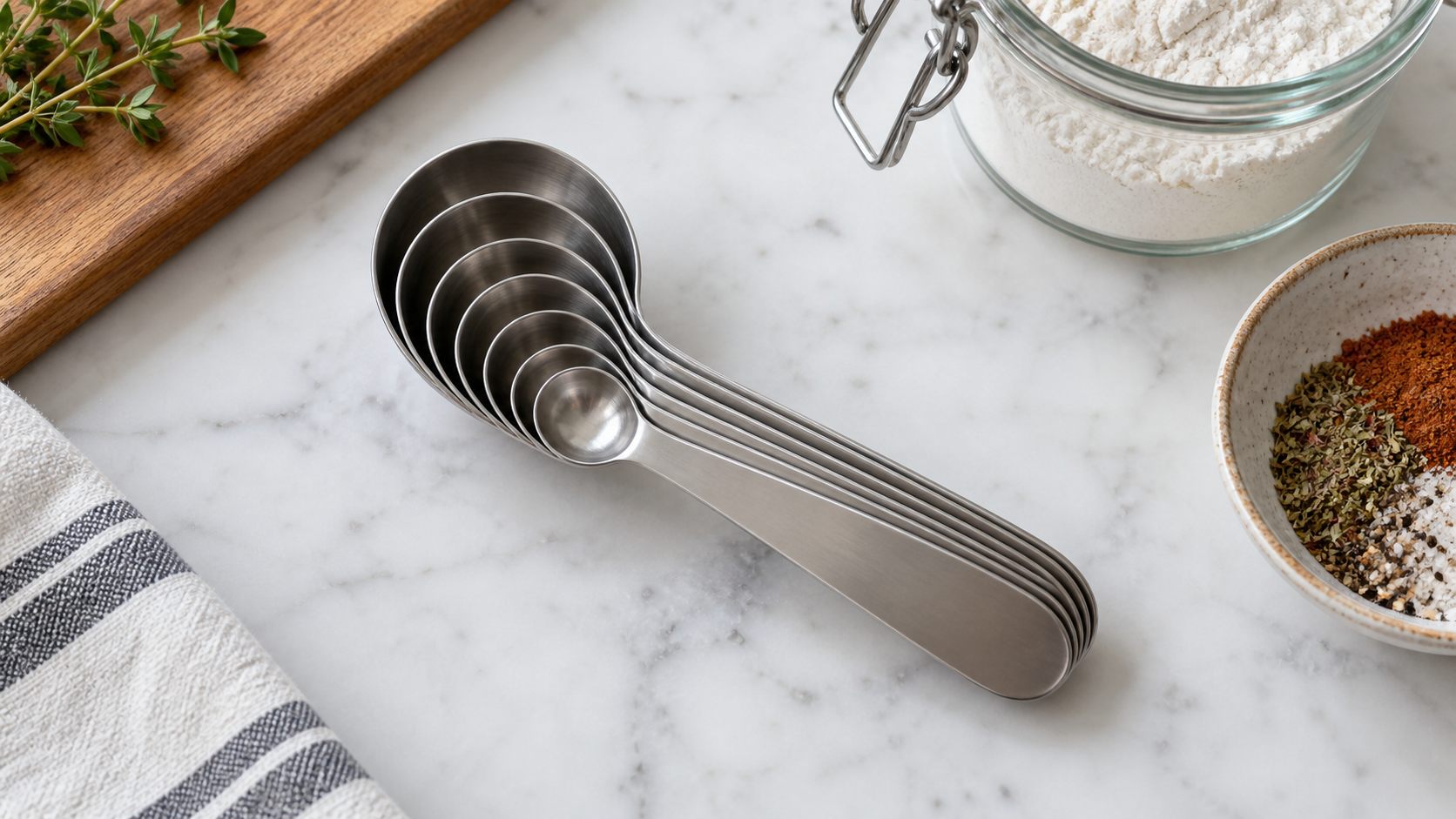
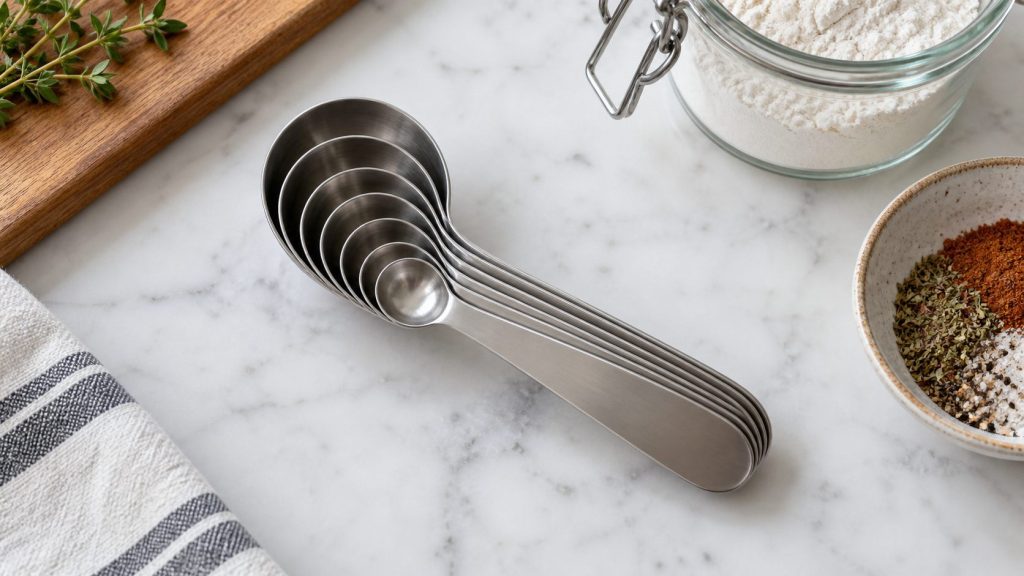
Enter the ultimate kitchen hack: magnetic measuring spoons. This design keeps individual spoons removable while allowing the set to nest in one stack. The useful question is whether the shape, markings, and included sizes match the way you cook or bake.
Why Switch to Magnetic Measuring Spoons?
Standard spoon rings require you to wash the whole bunch even if you only used one, or you have to pry the metal ring open to detach the one you need. Magnetic spoons solve all of this by nesting neatly together with a strong magnetic center.
- No More Lost Spoons: Because they stick together, your drawer stays perfectly organized. You grab the whole stack, easily slide off the one you need, and snap it back when you're done.
- Space-Saving: They lay completely flat and compact, freeing up valuable drawer real estate.
Essential Features to Look For
When searching for the best stackable measuring spoons on Amazon, keep an eye out for these premium features:
- Dual-Sided Design: The best models feature an oval head on one end (perfect for sliding into narrow spice jars) and a round head on the other (great for liquids). It’s like getting two sets in one!
- Material and finish: Compare the listed steel grade, edge finish, handle stiffness, and care instructions. Stainless steel is easy to clean, but every set should still be dried and maintained according to its manufacturer.
- Readable measurements: Etched or stamped markings are easier to identify after repeated use than faint surface printing. Check that the units you use most are clearly shown.
- Leveler Included: Many top-rated sets come with a straight-edge leveler tool to help you get precise measurements for baking.
Conclusion
Magnetic measuring spoons are most useful when drawer space is limited or individual spoons are used frequently. Compare the included sizes, handle shape, markings, and care instructions before choosing a set.
Shop magnetic measuring spoons stainless steel on Amazon
Check the Included Spoon Sizes
Do not assume every set contains the same measurements. A basic set may cover teaspoon and tablespoon fractions, while a larger set can include less common sizes. Compare the list with recipes you make often. If you regularly use metric recipes, confirm whether milliliter values are marked clearly rather than relying only on approximate conversions.
The smallest spoon should fit inside your spice jars without forcing you to pour ingredients into your hand. The largest spoon should remain level when filled and should not be too wide for the containers you commonly use.
Dual-Sided vs. Single-Sided Spoons
Dual-sided spoons can be convenient because a narrow end reaches into spice containers and a rounded end handles liquids. The tradeoff is that one end may touch the counter while the other is being used. A single-sided set is simpler to rest on a work surface and may be easier to load into some dishwashers.
If you frequently alternate between dry and wet ingredients, consider whether the set is easy to rinse and dry between measurements. Magnetic storage helps organization, but it does not replace normal food-safety practices.
How to Get More Consistent Measurements
- For flour, cocoa, and similar dry ingredients, fill the spoon gently and level the top without packing it down unless the recipe specifically says otherwise.
- For liquids, place the spoon on a stable surface when possible and fill to the rim indicated by the design.
- Use separate clean spoons for ingredients that should not be cross-contaminated.
- Confirm whether a recipe uses US volume measures, metric volume, or weight before substituting units.
For precise baking, a digital kitchen scale may be more repeatable for flour and other bulk ingredients. Measuring spoons remain useful for small quantities such as salt, spices, extracts, and leavening agents.
Magnet Strength and Storage
The magnets should keep the empty spoons aligned in a drawer but still allow one spoon to slide away without excessive force. Reviews can help identify sets that separate too easily or collect metal debris around exposed magnet areas. Store the stack in a clean, dry section of the drawer away from loose blades and small metal tools.
Cleaning and Care
Follow the care instructions for the specific set. Even when dishwasher use is permitted, separating the spoons improves water exposure and drying. Dry around seams or embedded magnets before restacking. If a spoon develops a loose magnet, sharp edge, corrosion, or damaged coating, stop using it with food.
Who Benefits Most from This Design?
A magnetic set suits cooks who want removable spoons without a connecting ring and people organizing a narrow utensil drawer. It may be less important for someone who already stores measuring tools in an open container or prefers a single spoon with adjustable markings. For broader cabinet planning, see our guide to kitchen cabinet organizers for small kitchens.