Affiliate disclosure: As an Amazon Associate I earn from qualifying purchases. This guide uses affiliate links to Amazon.com.
A small entryway has to process shoes, keys, bags, mail, umbrellas, and daily clutter in a few square feet. The best products are slim, vertical, and easy to reset when you walk in.
Slim shoe rack
A narrow shoe rack keeps the floor visible and makes the entryway feel larger. Measure the depth carefully, especially if the door swings inward.
Search slim shoe racks on Amazon
Wall hooks
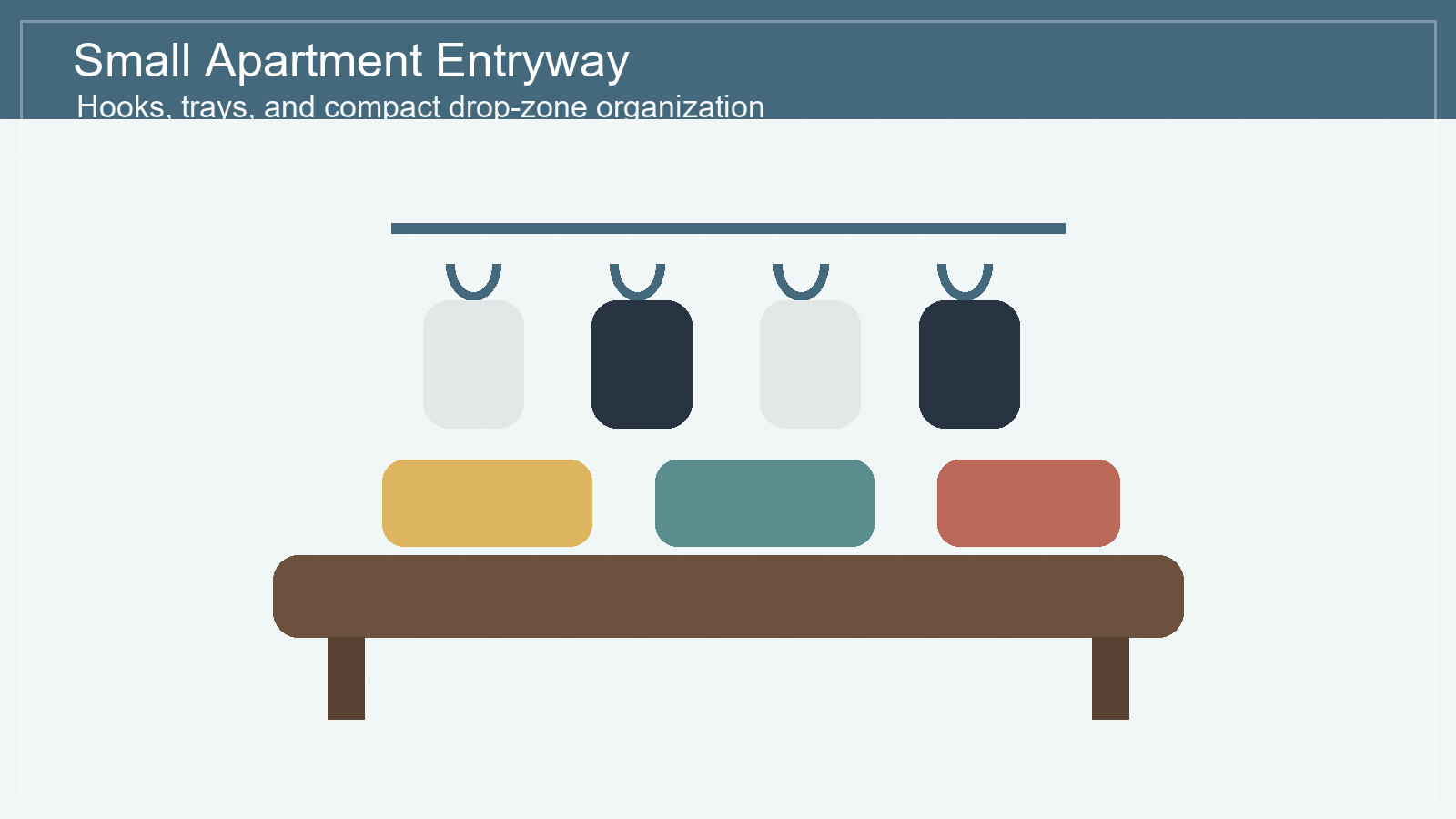
Hooks are a renter-friendly way to get bags and jackets off chairs. Choose a rail-style hook rack when you need multiple landing spots in one clean line.
Search entryway wall hooks on Amazon
Key and mail organizer
A key organizer works when it lives exactly where you enter the home. Look for a design with hooks, a mail slot, and enough clearance for sunglasses or a wallet.
Search key and mail organizers on Amazon
Storage bench
If you have a little more space, a storage bench adds seating and hides seasonal shoes, reusable bags, or pet supplies. Avoid deep benches if the hallway is tight.
Search small entryway benches on Amazon
FAQ
How do I organize an entryway with no closet?
Use hooks for vertical storage, a slim shoe rack for the floor, and a small tray or wall organizer for keys and mail.
What should not go in a small entryway?
Long-term storage usually makes a small entryway feel blocked. Keep only the items used during the current week.
Plan the Entryway Around Your Daily Route
Before buying storage, notice what happens during the first minute after you enter the apartment. Shoes may collect beside the door, keys may land on the nearest surface, and bags may end up on a chair. Give each repeated action one obvious destination. A system that takes several extra steps is less likely to stay organized during a busy week.
Keep the most frequently used items between knee and shoulder height. Reserve high shelves for seasonal accessories and the lowest level for shoes or a washable drip tray. Leave a clear path from the door into the room and make sure no organizer interferes with the handle, lock, light switch, or door swing.
Measure the Walkway, Not Just the Wall
A narrow rack can still feel intrusive if it reduces the walking path. Measure the entryway at its tightest point with the door fully open. Mark the proposed depth with painter’s tape on the floor and live with that outline for a day. You should be able to carry groceries through the space and put on shoes without turning sideways.
- Check baseboards before choosing a wall-mounted or flush-to-wall unit.
- Confirm that hooks will not place coats where they cover switches or scrape the door.
- Allow ventilation around damp shoes and umbrellas.
- For renters, verify the permitted wall fasteners and weight limits.
Create Simple Storage Zones
A compact entryway works best with three zones. The drop zone holds keys, sunglasses, and outgoing mail. The hanging zone holds the jacket or bag currently in use. The floor zone holds only everyday shoes. Separating these categories prevents a single basket from becoming a mixture of receipts, cables, pet supplies, and items that belong elsewhere.
Use a small tray for loose objects rather than a large open bowl. The limited capacity acts as a reminder to reset the space. Mail should have only two destinations: an action slot for items that need attention and recycling for everything else.
Choose Between Open and Closed Storage
Open racks are easier to use and help wet shoes dry, but they require a quick visual reset. Closed cabinets reduce visual clutter, although they need enough ventilation and clearance for doors or drawers. A bench with concealed storage can work in a wider entry, while a wall rail and narrow rack are usually more practical in a tight corridor.
A Five-Minute Weekly Reset
Return shoes that are out of season, move processed mail, empty reusable bags, and wipe the key tray. Check that hooks and wall fasteners remain secure. This short routine keeps a small entryway functional without turning it into a long-term storage area. For more small-space ideas, see our guide to kitchen cabinet organizers for small kitchens.